Special Issues

Evidence-based Approaches to Managing Stress, Depression, Anxiety, and Suicide

Submission Deadline: 30 April 2026 View: 1274 Submit to Special Issue

Guest Editors

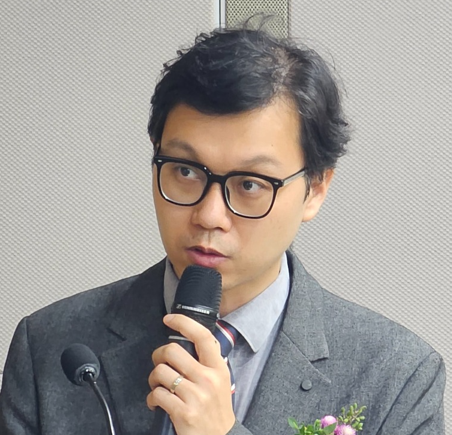
Dr. Soo-Hyun Sung

Email: koyote10010@nikom.or.kr

Affiliation: Department of Policy Development, National Institute of Korean Medicine Development, Seoul, 04554, Republic of Korea

Homepage:

Research Interests: stress; depression; anxiety; pain management; national survey; systematic review
图片7.png


Prof. Dr. Se-Ran Park

Email: compassion@sdu.ac.kr

Affiliation: Department of Counseling Psychology, Seoul Digital University, Seoul, 18314, South Korea

Homepage:

Research Interests: self-compassion; anxiety; panic; depression; CBT

图片8.png


Summary

1) In modern society, people are facing mental health problems due to various reasons such as work-related stress, anxiety about the future, economic difficulties, interpersonal relationships, deterioration of health, and the spread of infectious diseases (e.g. COVID-19 pandemic). In particular, mental health problems such as stress, depression, anxiety, suicidal thoughts, and suicide are emerging as serious issues at both the social and national levels. In other words, mental health is no longer just an individual issue; it must be addressed through national-level policy support to build a social safety net. Therefore, scientific research on mental health is necessary to promote evidence-based policies.


2) The aim of this Special Issue is to present evidence-based approaches for the promotion and treatment of mental health. Scientific research using diverse methodologies will play a crucial role in determining the implementation of mental health policies within the healthcare systems of various countries around the world.


3) Suggested themes shall be listed.

• Clinical studies for treating stress, depression, anxiety, and suicide

• Cross-Sectional or cohort studies on stress, depression, anxiety, and suicide

• Qualitative research on stress, depression, anxiety, and suicide

• Mixed methods research on stress, depression, anxiety, and suicide

• Systematic reviews and meta-analyses on stress, depression, anxiety, and suicide

• Evidence-based policy implications for mental health


Keywords

mental health, stress, depression, anxiety, suicide, evidence-based policy

Published Papers


  • Open Access

    ARTICLE

    Associations of Self-Esteem, Life Satisfaction, Resilience, and Coping Strategies with Depression Severity: Evidence from a Comparative and Mediation Analysis

    Mahmut Selçuk, Fulden Cantaş Türkiş, Fatma Taşkın Koca, Volkan Dizman, Sevilay Yerlikaya Boz
    International Journal of Mental Health Promotion, DOI:10.32604/ijmhp.2026.076391
    (This article belongs to the Special Issue: Evidence-based Approaches to Managing Stress, Depression, Anxiety, and Suicide)
    Abstract Background: Self-esteem, life satisfaction, resilience, and coping strategies are closely linked to depression; however, their interrelationships and relative contributions to depressive outcomes remain insufficiently understood. This study aimed to examine these associations in individuals with major depressive disorder (MDD) and healthy controls and to evaluate their predictive and mediating roles in depression. Methods: This analytical cross-sectional study included 311 participants (158 patients with MDD and 153 healthy controls) recruited from the Psychiatry Outpatient Clinics of Mugla Training and Research Hospital. Psychiatric diagnoses were confirmed using the Structured Clinical Interview for DSM-5 (SCID-5). Groups were balanced for… More >

  • Open Access

    REVIEW

    Intervention Characteristics to Improve Stress Coping in Healthcare Students: A Systematic Review and Meta-Analysis

    Natalie Y. Luo, Edie L. Sperling, Juliette Lum
    International Journal of Mental Health Promotion, DOI:10.32604/ijmhp.2026.074948
    (This article belongs to the Special Issue: Evidence-based Approaches to Managing Stress, Depression, Anxiety, and Suicide)
    Abstract Objectives: Healthcare students experience significant stress due to their rigorous graduate school curricula. These levels of stress are associated with higher risks of depression, self-harm, and exhaustion. Coping interventions have been shown to help students develop healthy stress coping strategies. The purpose of this systematic review and meta-analysis was to examine the diverse array of coping interventions and what characteristics of coping interventions were most effective at decreasing stress among healthcare students. Methods: Any intervention designed to address coping for academic stress was included among medical, dental, nursing, physician assistant, allied health, veterinary, psychology, etc. students.… More >

  • Open Access

    ARTICLE

    A Follow-Up Study on the Clinical Effectiveness and Satisfaction of an Online Mental Health Self-Care Program for Mothers in Korea

    Hyein Jeong, Soobin Jang, Bo-Hyoung Jang, Chunhoo Cheon, Taek Gyu Kim, Chan Ho Ju, Hwimun Kim, Su Yong Shin, Kyeong Han Kim, Seong-Gyu Ko
    International Journal of Mental Health Promotion, Vol.27, No.11, pp. 1695-1708, 2025, DOI:10.32604/ijmhp.2025.071014
    (This article belongs to the Special Issue: Evidence-based Approaches to Managing Stress, Depression, Anxiety, and Suicide)
    Abstract Objectives: This study aimed to evaluate the clinical effectiveness, durability, and acceptability of a Korean medicine-based online mental health self-care program for mothers. Methods: This non-randomized comparative study evaluated the clinical effectiveness, durability, and acceptability of a Korean medicine-based online mental health self-care program for mothers. Group 1 (regular version) included 120 participants who attended one live session per week for 5 weeks, while Group 2 (shortened version) included 30 participants who completed five recorded sessions within 1 week. A total of 112 participants (93.3%) in Group 1 and all 30 participants (100%) in Group 2… More >

  • Open Access

    ARTICLE

    Communication Barriers, Emotional Distress and Mental Health Promotion in Cancer Care: Insights from Rural China

    Su Li, Nooreen Noordin, Dan Wang
    International Journal of Mental Health Promotion, Vol.27, No.11, pp. 1797-1812, 2025, DOI:10.32604/ijmhp.2025.072301
    (This article belongs to the Special Issue: Evidence-based Approaches to Managing Stress, Depression, Anxiety, and Suicide)
    Abstract Background: Communication barriers are a critical yet underexplored determinant of psychological well-being in oncology care, particularly among rural Chinese patients treated in urban hospitals. This study examined how Mandarin proficiency influences emotional distress and identified implications for mental health promotion. Methods: A sequential mixed-methods design was adopted. Quantitative data were collected from 180 rural cancer patients using the Putonghua Proficiency Test (PSC), the Hospital Anxiety and Depression Scale (HADS), and the Distress Thermometer (DT). Multiple linear regressions estimated covariate-adjusted associations between Mandarin proficiency and distress outcomes, controlling for demographic and clinical factors. Semi-structured interviews with 20… More >

  • Open Access

    ARTICLE

    The Impact of Duration Since Cancer Diagnosis and Anxiety or Depression on the Utilization of Korean Medicine

    Ji-eun Yu, Eunji Ahn, Hanbit Jin, Dongsu Kim
    International Journal of Mental Health Promotion, Vol.27, No.9, pp. 1353-1367, 2025, DOI:10.32604/ijmhp.2025.067407
    (This article belongs to the Special Issue: Evidence-based Approaches to Managing Stress, Depression, Anxiety, and Suicide)
    Abstract Background: Patients with cancer are confronted not only with physical changes and pain but also with significant psychological challenges, including distress, anxiety, and depression, as a consequence of their diagnosis and treatment. This study aimed to identify the factors influencing anxiety or depression in patients with cancer, examine the relationship between the duration since cancer diagnosis and psychological state, and explore the association between these factors and the use of Korean medicine (KM). Methods: This study utilized data from the 2018 Korea Health Panel spanning 2008 to 2018. The analysis focused on adult participants (aged… More >

Share Link
