 Open Access
ISSN:1546-2218 (print)
ISSN:1546-2226 (online)
Publication Frequency:Monthly





Computers, Materials & Continua is a peer-reviewed Open Access journal that publishes all types of academic papers in the areas of computer networks, artificial intelligence, big data, software engineering, multimedia, cyber security, internet of things, materials genome, integrated materials science, and data analysis, modeling, designing and manufacturing of modern functional and multifunctional materials. This journal is published monthly by Tech Science Press.
SCI: 2025 Impact Factor 2.4; Scopus CiteScore (Impact per Publication 2025): 6.6; SNIP (Source Normalized Impact per Paper 2025): 0.777; Ei Compendex; Cambridge Scientific Abstracts; INSPEC Databases; Science Navigator; EBSCOhost; ProQuest Central; Zentralblatt für Mathematik; Portico, etc.
 Open Access
REVIEW
CMC-Computers, Materials & Continua, Vol.89, No.1, 2026, DOI:10.32604/cmc.2026.086229 - 13 August 2026
(This article belongs to the Special Issue: Large Language Models: Foundations, Advances, and Emerging Applications)
Abstract Large Language Models (LLMs) have rapidly evolved into general-purpose systems with broad applicability across information access, reasoning, decision support, and human-computer interaction. Their growing deployment, however, has intensified concerns regarding safety, alignment, and robustness, especially as these models become integrated with external tools, retrieval systems, and increasingly agentic workflows. This review provides an analytical overview of the principal risks, technical advances, evaluation practices, and future directions in this area. It first clarifies the conceptual foundations of safety, alignment, robustness, and reliability in the context of LLMs. It then examines the major risk categories associated with More >
Open Access
REVIEW
CMC-Computers, Materials & Continua, Vol.89, No.1, 2026, DOI:10.32604/cmc.2026.084092 - 13 August 2026
(This article belongs to the Special Issue: Robotics Vision and Thinking)
Abstract Endowing embodied intelligent robots with dexterous manipulation capabilities is paramount for executing complex, open-ended tasks. These capabilities are foundational to advancing true robotic autonomy, thereby facilitating precision assembly, seamless collaborative operations, and highly specialized maneuvers across diverse industrial and service sectors. Focusing on dynamic, unstructured environments where conventional programmed behaviors prove inadequate, this paper presents a systematic, quantitatively driven review of training methodologies and generation techniques for manipulation skill models within the domain of embodied artificial intelligence (AI). To provide rigorous trend validation, this study conducts a comprehensive bibliometric analysis and quantitative literature evaluation. By… More >
Open Access
REVIEW
CMC-Computers, Materials & Continua, Vol.89, No.1, 2026, DOI:10.32604/cmc.2026.086270 - 13 August 2026
(This article belongs to the Special Issue: Vision, LiDAR, and Sensor Fusion-Based SLAM for Autonomous Navigation)
Abstract Autonomous navigation poses a key challenge in Artificial Intelligence (AI), necessitating agents to plan and execute actions in complex, partially visible surroundings. Simultaneous Localization and Mapping (SLAM) facilitates autonomous navigation of robots and vehicle objects to construct an unfamiliar environment map while concurrently monitoring their inside position. This systematic review investigates the nascent convergence of agentic AI, defined by goal-oriented autonomy, with adaptive decision-making and reasoning, with SLAM-based navigation systems. This paper utilized Preferred Reporting Items for Systematic Reviews and Meta-Analyses (PRISMA) methodology, which concentrated on peer-reviewed articles published in (2017–2026), particularly in SLAM-based intelligent… More >
Open Access
REVIEW
CMC-Computers, Materials & Continua, Vol.89, No.1, 2026, DOI:10.32604/cmc.2026.084672 - 13 August 2026
Abstract Artificial Intelligence of Things (AIoT) systems have emerged through the rapid integration of artificial intelligence (AI) and the Internet of Things (IoT), enabling intelligent sensing, distributed learning, and real-time decision-making across diverse application domains. However, this convergence also introduces a significantly expanded adversarial attack surface spanning sensing devices, communication networks, learning pipelines, and actuation environments. This paper presents a comprehensive systematic review of adversarial threats and defence mechanisms in AIoT systems using a novel 3D-AIoT-TT (Three-Dimensional AIoT Threat Taxonomy) framework. The proposed taxonomy jointly models three fundamental dimensions: (i) AI pipeline stages, (ii) IoT architectural… More >
Open Access
REVIEW
CMC-Computers, Materials & Continua, Vol.89, No.1, 2026, DOI:10.32604/cmc.2026.086341 - 13 August 2026
Abstract Visual simultaneous localization and mapping (VSLAM) is a key technology for mobile robotics, autonomous driving, and embodied intelligence, enabling self-localization, environment reconstruction, and scene understanding. Although conventional geometric methods have achieved notable success, their performance often degrades in challenging conditions, such as low-texture scenes, severe illumination changes, dynamic interference, and long-term environmental variations. Recent advances in deep learning have created new opportunities to improve VSLAM through stronger feature representations, learned priors, semantic perception, and emerging map representations. At the same time, the increasing adoption of learning-based modules has raised important questions about integration strategies, generalization,… More >
Open Access
REVIEW
CMC-Computers, Materials & Continua, Vol.89, No.1, 2026, DOI:10.32604/cmc.2026.085054 - 13 August 2026
Abstract With the rapid development of unmanned aerial vehicle (UAV) technologies, simultaneous localization and mapping (SLAM) has emerged as a key enabling paradigm for autonomous navigation and environmental perception. This paper presents a comprehensive survey of recent trends in UAV-based SLAM. First, we review the fundamental components of UAV-based SLAM systems, including commonly used onboard sensors and front-end odometry methods such as visual odometry, visual-inertial odometry, and LiDAR-inertial odometry, which provide reliable ego-motion estimation. Next, we summarize back-end methodologies that enhance estimation accuracy and global consistency, covering pose graph optimization, 3D reconstruction techniques, filter-based SLAM, fusion-based multi-UAV SLAM, More >
Open Access
REVIEW
CMC-Computers, Materials & Continua, Vol.89, No.1, 2026, DOI:10.32604/cmc.2026.085773 - 13 August 2026
Abstract Recently, unmanned aerial vehicles (UAVs), or drones, have attracted considerable research interest across diverse fields, encompassing public and private domains, industrial and academic fields, transportation areas, disaster and harsh environments, reliable delivery services, digital twin-enabled space, and smart cities. In particular, UAVs play a critical role in surveillance and security applications. In this paper, we investigate recent advances in surveillance and intelligent security applications using UAVs. This study covers a wide range of practical tasks and missions including intelligent traffic monitoring, disaster environments, forests and national parks, large-scale events and patrols in public circumstances. Also, More >
Open Access
REVIEW
CMC-Computers, Materials & Continua, Vol.89, No.1, 2026, DOI:10.32604/cmc.2026.081249 - 13 August 2026
Abstract The vision-language models (VLM) combine the image and text to solve practical applications. Specifically, VLM leverages the results of computer vision in conjunction with natural language processing (NLP), like a large language model (LLM), to address real-world problems such as automating and improving the quality of medical examinations and treatments in healthcare, building autonomous driving systems, image captioning, and generating automated chatbots. To understand the development and application of VLM, we surveyed VLM, classifying it according to model architecture, learning methods, evaluation measures, datasets, challenges, and future development directions of VLM based on the model… More >
Open Access
REVIEW
CMC-Computers, Materials & Continua, Vol.89, No.1, 2026, DOI:10.32604/cmc.2026.084949 - 13 August 2026
Abstract The rapid evolution of communication networks, driven by the expansion of heterogeneous environments such as 6G, Internet of Things (IoT), and edge computing, has exposed a critical research gap in the lack of unified frameworks that jointly address intelligent network control and quantum-resilient security. Existing networking protocols were originally designed under static configurations and classical security assumptions, making them increasingly inadequate for dynamic, large-scale, and intelligent infrastructures exposed to quantum-enabled threats. At the same time, the emergence of Quantum Computing (QC) introduces severe security risks, as widely used cryptographic mechanisms supporting protocols such as Transport… More >
Open Access
REVIEW
CMC-Computers, Materials & Continua, Vol.89, No.1, 2026, DOI:10.32604/cmc.2026.084216 - 13 August 2026
Abstract Semiconductors represent the most complex production activities and stand at the forefront of smart manufacturing. In particular, the yield of advanced processes is strongly influenced by coupling among engineering systems, material behavior, and computational infrastructure. Consequently, the integration of deep learning (DL) and digital twins has become essential for driving the next-generation transformation of smart manufacturing. However, existing reviews predominantly organize literature through algorithm-oriented taxonomies, while isolated AI paradigms alone remain insufficient to effectively capture system-level interactions and industry-driven technological evolution. Therefore, this study proposes a system-oriented and industry-driven review framework, termed the System-under-Industry Guided… More >
Open Access
ARTICLE
CMC-Computers, Materials & Continua, Vol.89, No.1, 2026, DOI:10.32604/cmc.2026.084352 - 13 August 2026
(This article belongs to the Special Issue: Innovation in Quantum Computing for Cybersecurity Applications)
Abstract Increasing digitalization exposes critical infrastructure to sophisticated cyber threats, requiring new approaches to improving security and resilience. While classical machine learning techniques have shown promise in anomaly detection and threat mitigation, emerging quantum-inspired methods offer new opportunities to enhance detection capabilities by leveraging principles derived from quantum computing. The objective of this work is to propose a model for the early detection of Telephony Denial of Service attacks using a combination of classical algorithms and quantum computing-based techniques. Call records are embedded into a low-dimensional quantum feature space using spatial and temporal attributes, mapped through… More >
Open Access
ARTICLE
CMC-Computers, Materials & Continua, Vol.89, No.1, 2026, DOI:10.32604/cmc.2026.084061 - 13 August 2026
Abstract The design of steel and alloy materials is of critical importance across a wide range of industrial applications; however, effective intelligent agent-based assistants for this domain remain limited. To address this gap, we introduce STALAgent, a large language model (LLM)-based multi-agent system specifically tailored for intelligent and automated design of steel and alloy materials. STALAgent is centered on an LLM brain with several key agents (e.g., task assignment, semantic search, inverse design, and heat treatment simulation) that collectively form a closed-loop workflow from user query to material recommendation. This system leverages a CrewAI-based orchestrator to More >
Open Access
ARTICLE
CMC-Computers, Materials & Continua, Vol.89, No.1, 2026, DOI:10.32604/cmc.2026.084077 - 13 August 2026
Abstract Three-dimensional (3D) braided composites are widely used in aerospace and automotive industries due to their superior mechanical properties. However, traditional 3D four-directional or five-directional braided composites exhibit limitations in multi-axial load-bearing capacity and structural stability under complex stress conditions. To address these challenges, we propose a novel 3D seven-directional braided composite structure, which enhances mechanical performance in both axial and transverse directions by incorporating additional reinforcement yarns. This structure consists of braiding yarns, axial yarns, six-directional yarns and seven-directional yarns, forming a more uniform and stable interlacing network. Based on the positional relationships between yarns, More >
Open Access
ARTICLE
CMC-Computers, Materials & Continua, Vol.89, No.1, 2026, DOI:10.32604/cmc.2026.084754 - 13 August 2026
Abstract Vibrations occurring in the impellers of centrifugal compressors are among the primary factors that influence the reliability and service life of main gas pumping station units. A promising approach to improving the dynamic performance of centrifugal compressors is the use of modern metal-matrix composite materials for impellers. This article presents a prediction of the dynamic behavior of an impeller under actual operating conditions with the aim of eliminating resonance vibrations. Detailed geometric and finite-element modeling enabled an investigation of the prestressed state caused by centrifugal forces on the natural frequency spectrum of the impeller. To More >
Open Access
ARTICLE
CMC-Computers, Materials & Continua, Vol.89, No.1, 2026, DOI:10.32604/cmc.2026.082702 - 13 August 2026
Abstract The discovery of graphene and its unique physicochemical properties has catalyzed intensive research into alternative two-dimensional (2D) materials, with a view to their prospective applications in diverse fields of physics, chemistry, and materials science. In this context, there is a notable scientific interest in developing computationally efficient theoretical approaches capable of reliably estimating key parameters of organic films deposited on 2D surfaces. This objective necessitates a rigorous selection and validation of appropriate computational methods, ensuring an optimal balance between computational cost and predictive accuracy. This study presents a method for evaluating the thermodynamic and structural… More >
Open Access
ARTICLE
CMC-Computers, Materials & Continua, Vol.89, No.1, 2026, DOI:10.32604/cmc.2026.084386 - 13 August 2026
(This article belongs to the Special Issue: Secure and Scalable Blockchain–IoT Architectures for Next-Generation Distributed Systems)
Abstract Smart city systems increasingly depend on data analytics and visualization to support informed and timely decision making in complex urban environments. However, existing middleware solutions predominantly focus on data acquisition and communication, while analytical processing and visualization are typically delegated to external applications, resulting in increased development complexity, reduced reusability, and fragmented system architectures. This study presents analytics and visualization-centric middleware named “Service-Oriented Middleware for Smart City Applications” (SOMSCA), in which these capabilities are embedded directly within the middleware layer. SOMSCA adopts a service-oriented approach, exposing analytics and visualization functionalities as reusable platform services, and… More >
Open Access
ARTICLE
CMC-Computers, Materials & Continua, Vol.89, No.1, 2026, DOI:10.32604/cmc.2026.084015 - 13 August 2026
(This article belongs to the Special Issue: Deep Learning for Emotion Recognition)
Abstract The accurate classification of human emotions from speech remains a formidable challenge due to the dynamic, non-stationary properties of audio signals and pervasive background noise. Traditional single-domain extraction methods frequently fail to capture overlapping acoustic phenomena, resulting in high misclassification rates among acoustically similar emotions. To overcome this, we propose the Dual-Decomposition Ensemble (DDE-SER), an architecture that synergizes 1D adaptive frequency filtering with 2D spatial spectrogram separation. The framework operates through two distinct pipelines: an adaptive time-domain branch that leverages VGG-optiVMD to autonomously extract Intrinsic Mode Functions (IMFs), and a structural spectrogram branch that applies… More >
Open Access
ARTICLE
CMC-Computers, Materials & Continua, Vol.89, No.1, 2026, DOI:10.32604/cmc.2026.081091 - 13 August 2026
Abstract The recent increase in deepfake content has significantly increased cyber threats. Although numerous deepfake detection technologies have achieved high accuracy, there are limits to clarifying the rationale behind their detection decisions. To bridge the gap, in our study, we leverage the combination of Explainable Artificial Intelligence (XAI) and Large Language Models (LLMs) to deliver clear, consistent, and understandable interpretations of deepfake detection outcomes. To do that, we integrate XAI and LLMs to visually represent detection rationales and automatically generate coherent natural-language explanations. During the implementation of our method, we developed a multi-task learning framework based… More >
Open Access
ARTICLE
CMC-Computers, Materials & Continua, Vol.89, No.1, 2026, DOI:10.32604/cmc.2026.084270 - 13 August 2026
Abstract Automatic pain assessment from speech is an emerging approach for non-invasive and objective healthcare monitoring. However, many existing methods are evaluated on single datasets or under controlled conditions, which limits their robustness under diverse real-world conditions. This paper presents a lightweight, end-to-end deep learning framework for speech-based pain level classification that explicitly targets multi-dataset robustness assessment. The proposed approach uses log-Mel spectrograms with an EfficientNetV2B0 backbone to learn discriminative acoustic features without relying on handcrafted feature engineering or multi-stage pipelines. The model is evaluated on heterogeneous datasets, including clinical recordings, controlled experimental data, and a More >
Open Access
ARTICLE
CMC-Computers, Materials & Continua, Vol.89, No.1, 2026, DOI:10.32604/cmc.2026.084639 - 13 August 2026
Abstract Large Language Models (LLMs) are increasingly being used to generate source code. However, a substantial proportion of their output contains security vulnerabilities. Existing defenses typically apply uniform analysis to all code fragments, irrespective of their risk profiles. This study presents RAVE-Code, a three-layer framework that calibrates the verification effort based on the risk associated with each detected weakness. The Detection layer employs Bandit for pattern-based static analysis, annotating findings with their respective Common Weakness Enumeration (CWE) classes. The Risk Scoring layer calculates a composite risk score for each weakness instance by integrating the Common Vulnerability… More >
Open Access
ARTICLE
CMC-Computers, Materials & Continua, Vol.89, No.1, 2026, DOI:10.32604/cmc.2026.084499 - 13 August 2026
Abstract Web honeypots serve as foundational technologies for active deception, attracting attackers and extracting actionable threat intelligence. To address the challenges associated with manual and labor-intensive frontend construction, this paper presents the HFG framework, a security-oriented frontend generation framework designed for the large-scale deployment of heterogeneous Web-service decoy nodes. HFG utilizes a vision-to-code architecture integrating a PVT-CoT visual encoder, multi-scale adaptive fusion, visual token compression, a visual prefix bridge, and a Qwen2-LoRA code decoder. The model is trained on WebSight-derived data and evaluated on both the WebSight-derived test set and the Design2Code benchmark. General reconstruction metrics,… More >
Open Access
ARTICLE
CMC-Computers, Materials & Continua, Vol.89, No.1, 2026, DOI:10.32604/cmc.2026.084652 - 13 August 2026
Abstract Degradation data in practical reliability engineering are often scarce and heterogeneous, originating from multiple sources with varying degrees of uncertainty and conflict. Accordingly, this study proposes a hybrid framework that integrates Dempster–Shafer (D-S) evidence theory with the Wiener process for small-sample reliability assessment using multi-source heterogeneous data. First, a probabilistic non-uniform sampling method regularizes varied data sources and computes basic probability assignments (BPA). Second, a weight synthesis mechanism is constructed, where prior weights derived from prior knowledge are updated by evidence similarity quantified through the Expectation–Width (EW) distance, yielding posterior weights. Quantile sequences from each More >
Open Access
ARTICLE
CMC-Computers, Materials & Continua, Vol.89, No.1, 2026, DOI:10.32604/cmc.2026.084290 - 13 August 2026
Abstract Few-shot relation classification aims to identify semantic relations between entity pairs under limited annotated data. Although recent prompt learning-based methods have achieved promising performance, they often rely on manually crafted, domain-specific prompt templates, which restrict their transferability across domains. In this paper, building upon the multi-task prompt transfer paradigm of MPT, we propose a Confidence-guided Orthogonality-constraint Prompt Adaptation framework for few-shot relation classification, named COPA. The proposed framework learns a shared domain-invariant prompt matrix together with domain-specific low-rank prompt matrices via multi-domain soft prompt tuning, enabling the transfer of domain-invariant relational knowledge across domains. Unlike… More >
Open Access
ARTICLE
CMC-Computers, Materials & Continua, Vol.89, No.1, 2026, DOI:10.32604/cmc.2026.082254 - 13 August 2026
Abstract This paper presents an accurate and efficient methodology for parameter extraction in complex impedance models using Differential Evolution (DE), an evolutionary optimization technique. The proposed approach targets equivalent RLC circuit topologies and aims to match measured impedance characteristics across a wide frequency spectrum. By formulating the extraction process as a global optimization problem, DE enables precise identification of component values, even for high-order models with multiple resonances. The method is implemented in Python using open-source libraries, facilitating reproducibility and integration into broader modeling workflows. Validation is performed on both analytically derived resonant circuits and physically More >
Open Access
ARTICLE
CMC-Computers, Materials & Continua, Vol.89, No.1, 2026, DOI:10.32604/cmc.2026.083290 - 13 August 2026
Abstract Complex procedural workflows in maintenance and parametric design often fail due to violated long-range dependencies, unsatisfied preconditions, and inconsistent parameter bindings. In such workflows, an early structural deviation may propagate silently and eventually induce global failure. Existing workflow auditing methods, particularly those based on large language models (LLMs) or sequence matching, often rely on implicit reasoning, exhibit unstable outputs, and provide limited support for reproducible error localization. To address these limitations, we propose a verification-centric auditing framework that couples an explicit typed dependency graph with an executable state transition system. The dependency graph represents data… More >
Open Access
ARTICLE
CMC-Computers, Materials & Continua, Vol.89, No.1, 2026, DOI:10.32604/cmc.2026.083887 - 13 August 2026
Abstract With the development of the Internet of Things (IoT), there is a rising demand for ciphertext retrieval. However, existing searchable encryption schemes mainly support single-modal retrieval, while current cross-modal searchable encryption methods often suffer from high computational overhead and lack reliable result verification. To address these problems, we propose a cross-modal searchable encryption scheme with result verification (VCMSE). First, we design a cross-modal hash extraction method that combines contrastive learning with a residual similarity matrix to generate encryption-friendly binary features with enhanced semantic consistency. Second, we designed a lightweight garbled circuit-based matching mechanism that enables More >
Open Access
ARTICLE
CMC-Computers, Materials & Continua, Vol.89, No.1, 2026, DOI:10.32604/cmc.2026.083353 - 13 August 2026
Abstract The missile warning constellation is fundamental to national territorial security and has significant strategic and military value. This study proposes a two-stage, nested co-optimization framework with adaptive evolutionary operators, termed TNC-A, to address challenges in genetic representation, evaluation distortion, the curse of dimensionality, and search inefficiency within the co-optimization of component-level constellation morphology and mission planning. A hybrid encoding scheme combining tree-structured and real-valued vector representations was adopted to encode all optimization variables, including constellation configuration, component-level unified platform information, and mission planning parameters. Second, a multi-stage optimization strategy integrated with a double-nested structure was More >
Open Access
ARTICLE
CMC-Computers, Materials & Continua, Vol.89, No.1, 2026, DOI:10.32604/cmc.2026.083419 - 13 August 2026
Abstract The rapid proliferation of encrypted communication technologies, such as TLS, VPNs, and Tor, has significantly limited the effectiveness of traditional traffic classification methods that rely on port numbers or deep packet inspection. While handcrafted statistical features provide partial solutions, they often lack robustness and generalization in complex traffic scenarios. Although deep learning models such as CNNs and RNNs can capture local and sequential patterns, they typically overlook higher-order structural dependencies among bytes. To address these challenges, we propose DVG-GNN, a Dual-View Graph representation learning framework for encrypted traffic classification. The framework decomposes each packet into More >
Open Access
ARTICLE
CMC-Computers, Materials & Continua, Vol.89, No.1, 2026, DOI:10.32604/cmc.2026.084273 - 13 August 2026
(This article belongs to the Special Issue: Advances in Intrusion Detection and Prevention Systems)
Abstract Cybersecurity threats in Internet of Things (IoT) networks have escalated, enabled by rapid advancements in wireless communication and edge computing technologies. These advancements expose networks to a wide range of sophisticated and evolving threats and increasingly complex research challenges. Traditional Intrusion Detection and Prevention Systems (IDS/IPS) often fail to provide reliable performance regarding the flexibility and scalability required to handle evolving attack patterns. This study proposes an APENet approach to detect cyberattacks from a real-world cybersecurity dataset, and incorporated a contextual dependency mechanism. The approach captures both local transition dependencies and global relational interactions within… More >
Open Access
ARTICLE
CMC-Computers, Materials & Continua, Vol.89, No.1, 2026, DOI:10.32604/cmc.2026.083466 - 13 August 2026
Abstract In recent years, embodied intelligence has become an important research direction. Slip detection is a critical challenge in dexterous robotic manipulation, especially in manipulating deformable objects such as soft fruits. Visual–tactile fusion can provide rich sensory information, but it also introduces significant modality differences. We propose STR-CMFNet, a novel network framework for visual–tactile slip detection. The framework adopts a two-stage design. It consists of Spatio-Temporal Rectification (STR) and Cross-Modal Fusion (CMF). The STR applies temporal attention weights to recalibrate key-frame features. It also refines spatial feature maps. Based on the corrected features, the CMF module… More >
Open Access
ARTICLE
CMC-Computers, Materials & Continua, Vol.89, No.1, 2026, DOI:10.32604/cmc.2026.085382 - 13 August 2026
Abstract Multimodal sentiment analysis (MSA) has made significant progress in integrating heterogeneous information from text, speech, and vision. However, real-world multimodal data often suffer from modality noise, semantic inconsistency, and incomplete modality information, which can weaken cross-modal fusion and reduce the reliability of sentiment prediction. To address these challenges, this paper proposes RUAL, a robust uncertainty-aware learning framework for multimodal sentiment analysis. Specifically, RUAL first employs a Gathered Multi-Head Attention Pooling (GMHA) module to aggregate intra-modal features and estimate modality uncertainty based on attention entropy. Then, an Uncertainty-Aware Cross-Modal Coupled Layer (UACCL) is introduced to dynamically More >
Open Access
ARTICLE
CMC-Computers, Materials & Continua, Vol.89, No.1, 2026, DOI:10.32604/cmc.2026.081458 - 13 August 2026
Abstract Scalability limitations, privacy risks, and lack of adaptability remain key challenges in centralized medical digital win (MDT) architectures. While federated learning (FL) mitigates the need to share raw data, it often lacks adaptability to dynamic clinical environments and does not fully integrate formal privacy guarantees into the learning process. To address these challenges, this paper proposes a decentralized, federated, multi-agent reinforcement learning (F-MARL) framework to coordinate MDTs in the presence of partial observability. The framework is formulated as a multi-agent partially observable Markov decision process (MA-POMDP), enabling distributed policy optimization in heterogeneous and uncertain clinical… More >
Open Access
ARTICLE
CMC-Computers, Materials & Continua, Vol.89, No.1, 2026, DOI:10.32604/cmc.2026.085749 - 13 August 2026
Abstract Accurate prediction of coal spontaneous combustion (CSC) temperatures is crucial for safe coal mine production. To further improve the accuracy of CSC temperature prediction and the interpretability of the model, this study proposes an interpretable Chebyshev chaotic mapping-Lévy flight-Enhanced pinhole imaging inverse learning-Adaptive weighted Osprey Optimization Algorithm optimized Bidirectional Long Short-Term Memory (CLEA-OOA-BiLSTM) framework for predicting CSC temperatures. First, we optimized the Osprey Optimization Algorithm (OOA) by incorporating the Chebyshev chaotic map, Lévy flights, enhanced pinhole imaging backpropagation, and an adaptive weighting strategy, thereby developing the CLEA-OOA algorithm. Through comparative experiments using eight benchmark test… More >
Open Access
ARTICLE
CMC-Computers, Materials & Continua, Vol.89, No.1, 2026, DOI:10.32604/cmc.2026.083550 - 13 August 2026
(This article belongs to the Special Issue: Intelligent Anomaly Detection Solutions for Advanced Environments)
Abstract The recent sophistication of contemporary cyber threats, such as advanced persistent threats (APTs), zero-day exploits, and polymorphic malware, has revealed serious limitations of traditional rule-based and shallow machine learning detection systems. This paper introduces a new self-managed cyber threat detection and response model, CyberSentinel-LLM, that leverages a fine-tuned large language model (LLM) and a multi-agent reinforcement learning system. The framework employs a LoRA-adapted LLaMA-3-8B backbone (fine-tuned on domain-specific cybersecurity log data using Low-Rank Adaptation with rank r = 16) for contextual log analysis, semantic threat classification, and automated incident response through four specialised agents: Detection,… More >
Open Access
ARTICLE
CMC-Computers, Materials & Continua, Vol.89, No.1, 2026, DOI:10.32604/cmc.2026.084688 - 13 August 2026
Abstract Multivariate time-series anomaly detection is widely used to identify abnormal operating patterns in complex monitoring systems. Exogenous or contextual inputs can provide useful information for anomaly detection, but their effects on endogenous variables may appear with temporal delays. Direct synchronous modeling is therefore insufficient for capturing delayed response patterns. This study proposes EMS-uDTWAD, a multi-scale anomaly detection framework that combines explicit lag alignment with uncertainty-aware normal-pattern matching. First, the time-series data are divided into fine-grained and coarse-grained windows. At the coarse-grained scale, a lag alignment module estimates delayed responses from exogenous or contextual inputs to… More >
Open Access
ARTICLE
CMC-Computers, Materials & Continua, Vol.89, No.1, 2026, DOI:10.32604/cmc.2026.084177 - 13 August 2026
Abstract Tightening global regulation of digital toxicity demands hate-speech detection that is accurate, explainable, traceable, and forensically usable. The challenge intensifies in multilingual and code-mixed settings such as Indonesian social media, where linguistic variation and informal expressions cause feature sparsity and reduce machine learning (ML) effectiveness. Most prior work emphasizes text classification while neglecting actor profiling and the network structures through which hate speech propagates. We propose Dynamic Lexicon-Driven Network (DyLex-Net), an integrated framework for profiling actors who disseminate hate speech, combining dataset-driven dynamic-lexicon analysis, classical ML ensemble validation, and ego-network analysis under a forensic-readiness orientation.… More >
Open Access
ARTICLE
CMC-Computers, Materials & Continua, Vol.89, No.1, 2026, DOI:10.32604/cmc.2026.083166 - 13 August 2026
Abstract Open-source platforms and issue tracking systems such as GitHub and Jira generate large volumes of issue reports and code changes, making effective bug identification a challenging task. This study investigates software bug prediction by integrating various feature extraction methods, including Word2Vec, TF-IDF, FastText, GloVe, and Doc2Vec, with several lightweight ML algorithms. Hybrid feature sets are further enhanced using Discrete Cosine Transform (DCT) and Discrete Wavelet Transform (DWT) and empirical results indicate that Word2Vec and Multi-Layer Perceptron (MLP) provide comparatively stronger performance. The study proposes a Hybrid Attention-Residual Multilayer Perceptron (HAR-MLP) model to automatically classify software… More >
Open Access
ARTICLE
CMC-Computers, Materials & Continua, Vol.89, No.1, 2026, DOI:10.32604/cmc.2026.084755 - 13 August 2026
Abstract With the development of vision-language pre-trained models, effectively exploiting high-level semantics and precisely controlling bitrate in learned image compression remains a challenging problem. Existing methods mainly rely on image feature modeling alone, making it difficult to jointly preserve fine-grained details and semantic consistency under a given bitrate budget. To address this issue, this paper proposes a learned image compression framework that integrates text-semantic guidance with content-aware bitrate control. The framework combines Bootstrapping Language-Image Pre-training (BLIP) and Contrastive Language-Image Pre-training (CLIP) to extract image semantic information, and performs conditional modulation on multi-scale visual features through feature-wise… More >
Open Access
ARTICLE
CMC-Computers, Materials & Continua, Vol.89, No.1, 2026, DOI:10.32604/cmc.2026.083186 - 13 August 2026
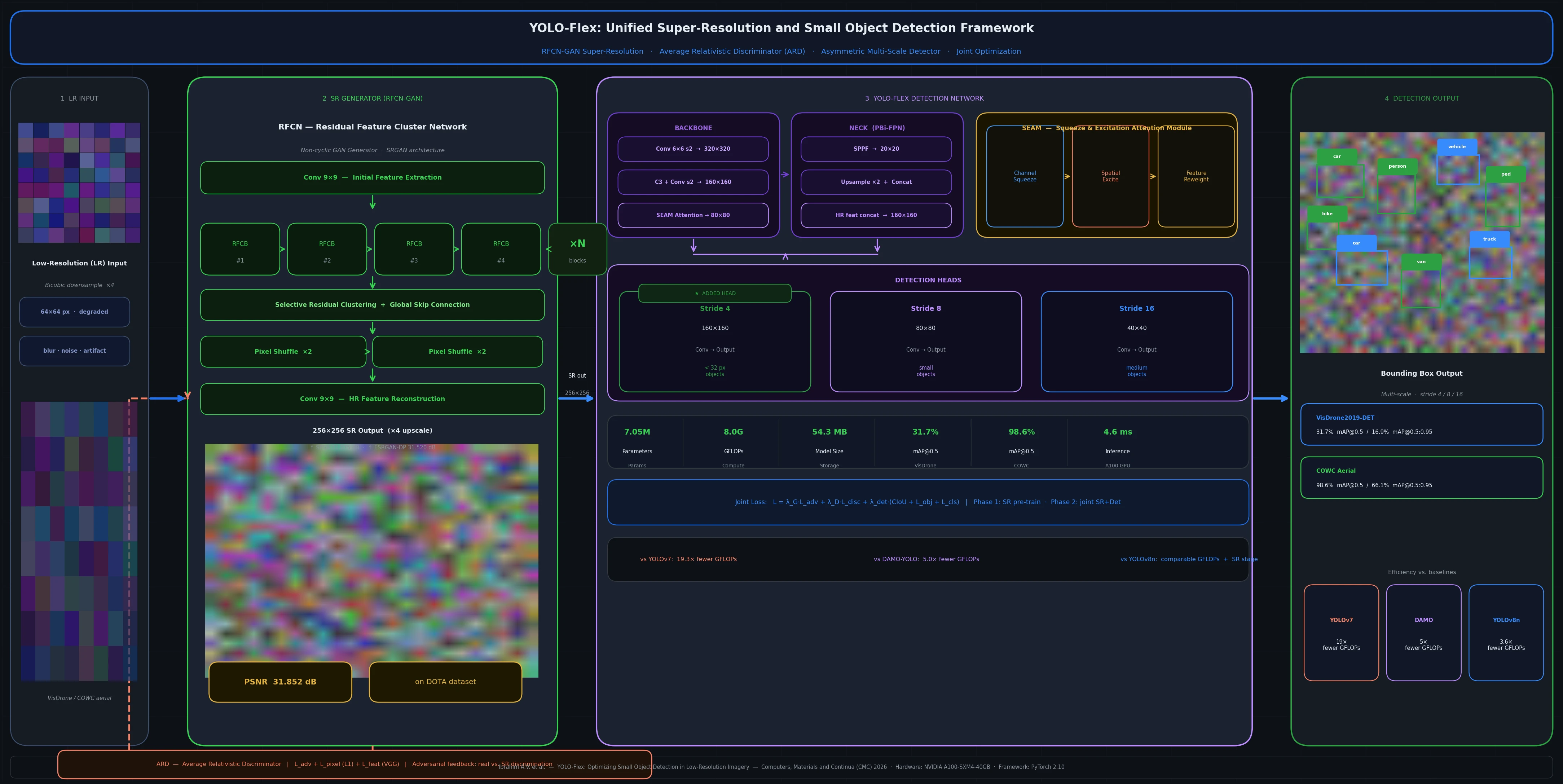
Abstract The detection of small objects in low-resolution aerial imagery presents a persistent challenge in computer vision, where hardware constraints, imaging altitude, and scene complexity collectively degrade spatial detail to the point where standard detection frameworks fail. Existing super-resolution methods offer partial remedies but are limited by substantial computational costs and by feature discrepancies between Generative Adversarial Network-enhanced and real high-resolution images that degrade downstream detection accuracy. This paper presents YOLO-Flex, a unified framework that addresses these challenges through the co-design of a super-resolution module and a task-adapted object detection network, jointly optimized through a shared… More >
Graphic Abstract
Open Access
ARTICLE
CMC-Computers, Materials & Continua, Vol.89, No.1, 2026, DOI:10.32604/cmc.2026.084506 - 13 August 2026
Abstract Existing deep-learning-based steganography methods are typically designed for single-modality cover data and often rely on modality-specific network structures, which limits their cross-modal adaptability. To address this limitation, this paper proposes a multimodal implicit neural representation (INR) steganographic framework based on a point-cloud intermediate representation. The framework first fits the cover data as a carrier INR and samples the fitted carrier into a noisy point cloud. A pre-shared noise seed and secret key are then used to reproduce the carrier-derived point cloud and select a key-dependent point subset as the secret point cloud. Finally, a separate… More >
Open Access
ARTICLE
CMC-Computers, Materials & Continua, Vol.89, No.1, 2026, DOI:10.32604/cmc.2026.085136 - 13 August 2026
Abstract Accurate medical image classification increasingly relies on the joint modeling of global contextual semantics and fine-grained local structural cues, since many lesions are only reliably recognized when subtle local details are interpreted within their broader anatomical context. However, most recent hybrid CNN–Transformer and global–local frameworks still extract these features in separate streams and merge them only through late-stage static fusion, without explicit bidirectional interaction during representation learning. As a result, global context cannot effectively guide the refinement of subtle local structures, and local discriminative cues cannot recalibrate higher-level semantic reasoning before classification, which limits reciprocal… More >
Open Access
ARTICLE
CMC-Computers, Materials & Continua, Vol.89, No.1, 2026, DOI:10.32604/cmc.2026.084792 - 13 August 2026
Abstract This paper investigates how generative-artificial intelligence (AI) is influencing job requirements, skill compositions and sectoral dynamics across global labor markets. It examines the evolving frequency and framing of AI-related competencies in job postings, exploring whether generative-AI functions primarily as an augmentative or substitutive component in the workplace. A large-scale, multi-source corpus of over 150,000 English-language job postings (2018–2025) is compiled from twelve open-access datasets and one public API. The analytical framework integrates lexical skill extraction, semantic framing, topic modeling and time-series forecasting. Skill mentions are categorized into five dimensions: AI_Data, Routine, Soft_Meta, Domain_Specific and Leadership,… More >
Open Access
ARTICLE
CMC-Computers, Materials & Continua, Vol.89, No.1, 2026, DOI:10.32604/cmc.2026.084268 - 13 August 2026
(This article belongs to the Special Issue: Malware Analysis, Forensics, and Detection Using Artificial Intelligence)
Abstract Static Windows Portable Executable (PE) malware detection remains a significant challenge due to the growing use of packing, obfuscation, and code reuse techniques, which gradually reduce the effectiveness of signature-based and manually engineered feature approaches. Recent deep learning models that operate directly on binary code or static features have achieved encouraging results; however, most still rely on global file-level representations. Such approaches are susceptible to noise introduced by padding or obfuscation and may overlook localized malicious regions. Moreover, many multi-view methods process different feature sources independently, lacking mechanisms to enforce semantic consistency across views. This… More >
Open Access
ARTICLE
CMC-Computers, Materials & Continua, Vol.89, No.1, 2026, DOI:10.32604/cmc.2026.082631 - 13 August 2026
Abstract Deep neural networks are widely applied in computer vision tasks but remain highly vulnerable to adversarial attacks. Tiny and imperceptible perturbations can cause severe model misclassification. Most existing defense methods improve robustness but significantly reduce model accuracy on clean examples. To address this issue, we propose a defense framework combining pixel value transformation and spatial transformation. The proposed method divides the input image into two complementary regions. Feature compression is applied to one region to reduce model sensitivity to subtle perturbations. Intense reversible pixel transformation is applied to the other region to disrupt the spatial… More >
Open Access
ARTICLE
CMC-Computers, Materials & Continua, Vol.89, No.1, 2026, DOI:10.32604/cmc.2026.080077 - 13 August 2026
(This article belongs to the Special Issue: Advancements in Evolutionary Optimization Approaches: Theory and Applications)
Abstract This paper presents a Sine-Lucas Oscillation Particle Swarm Optimization (SLOPSO) XGBoost algorithm for landslide susceptibility prediction. SLOPSO extends canonical PSO by introducing an oscillation factor constructed from a sine function and the Lucas number sequence into the position update, which raises swarm diversity and improves the global search. SLOPSO is then applied to tune six XGBoost hyperparameters using K-fold cross-validation accuracy as the fitness function. In experimental evaluation, SLOPSO-XGBoost reaches a mean test Accuracy of 0.8113, F1 of 0.8182, and AUC of 0.8856 over 10 independent runs, outperforming standard PSO-XGBoost and the default Random Forest, More >
Open Access
ARTICLE
CMC-Computers, Materials & Continua, Vol.89, No.1, 2026, DOI:10.32604/cmc.2026.086522 - 13 August 2026
Abstract Unmanned aerial vehicle (UAV) communication links in low-altitude operations support mission control, status feedback, and data transmission. Abnormal communication states may affect mission continuity and risk response. However, conventional anomaly detection usually determines only whether a communication anomaly exists, making it difficult to support risk-state assessment and alert-threshold decision-making. To address this problem, this paper proposes Risk Stratification and Task-cost-aware Decision via Knowledge Distillation (RSTD-KD), a task-cost-aware UAV communication risk warning approach that integrates risk stratification, probability calibration, and threshold decision-making. RSTD-KD aggregates fine-grained communication records into window-level behavior samples, constructs low-, medium-, and high-risk… More >
Open Access
ARTICLE
CMC-Computers, Materials & Continua, Vol.89, No.1, 2026, DOI:10.32604/cmc.2026.084490 - 13 August 2026
Abstract Fine-grained multiclass intrusion detection over flow-level traffic remains difficult, largely because class boundaries are often entangled, temporal dependence is non-negligible, and the label distribution is heavily long-tailed. In this study, a compact temporal convolutional network (TCN)-bidirectional gated recurrent unit (BiGRU)-TinyTransformer framework is developed to bring these issues into a single modeling pipeline: the TCN branch focuses on short-range anomalous patterns, the BiGRU branch captures bidirectional temporal structure, and the TinyTransformer branch complements them with broader contextual interaction learning. To reduce the bias induced by extreme imbalance, training is not driven by a single correction mechanism, More >
Open Access
ARTICLE
CMC-Computers, Materials & Continua, Vol.89, No.1, 2026, DOI:10.32604/cmc.2026.083456 - 13 August 2026
Abstract Robust lane detection is a fundamental perception task for autonomous driving and Advanced Driver Assistance Systems. However, it remains challenging in real-world environments due to degraded lane markings, complex road topologies, occlusions, and adverse illumination conditions. This work aims to improve lane detection robustness by explicitly modeling lane geometric properties while preserving end-to-end efficiency. We propose a direction-curvature aware lane detection framework that integrates a novel Direction-Curvature Aware (DCA) attention module into an anchor-based architecture. The DCA module enables tangent-aligned feature aggregation guided by learned direction fields and curvature-consistent attention. In addition, we introduce a More >
Open Access
ARTICLE
CMC-Computers, Materials & Continua, Vol.89, No.1, 2026, DOI:10.32604/cmc.2026.080874 - 13 August 2026
Abstract Unmanned Aerial Vehicle (UAV) networks face escalating cybersecurity threats, especially from zero-day attacks that exploit previously unknown vulnerabilities. To address this, we present HADAR-UAV (Hybrid Anomaly Detection with Adaptive Risk-calibration for UAV). This novel intrusion detection framework integrates masked autoencoder representation learning with Deep Support Vector Data Description (Deep SVDD) under conformal prediction guarantees to calibrate risk. Our method overcomes three critical limitations of existing approaches: (i) over-reliance on attack signatures, (ii) lack of statistical guarantees on false alarm rates, and (iii) insufficient robustness in feature extraction under partial observation. Using a rigorous Leave-Two-Attack-Families-Out (L2AFO)… More >
Open Access
ARTICLE
CMC-Computers, Materials & Continua, Vol.89, No.1, 2026, DOI:10.32604/cmc.2026.085412 - 13 August 2026
Abstract The cyber-physical network (CPS) combines sensing, communication, and control in physical processes, making them very susceptible to sophisticated cyber-attacks that may cause safety-critical effects. There are two core shortcomings to existing intrusion detection systems (IDS): generative-only models have little transparency of decision-making, while explainable-only models have low robustness in the presence of imbalanced and zero-day attacks. This paper presents a sequentially integrated trustworthy intrusion detection (ID) framework that combines generative learning and explainable AI (XAI) to boost robustness and transparency. The generative module enhances training data diversity, while the explainability module provides post-hoc interpretations during… More >
Open Access
ARTICLE
CMC-Computers, Materials & Continua, Vol.89, No.1, 2026, DOI:10.32604/cmc.2026.083252 - 13 August 2026
Abstract The increasing prevalence of hate speech on social media platforms has spurred research aimed at mitigating this societal harm. However, the development of effective machine learning solutions is hindered by a lack of labelled hate speech data in languages beyond English, particularly when attempting granular, multi-class classification. This research aims to address this data scarcity by introducing a novel methodology leveraging the ‘Large Language Model as a judge’ paradigm to transform existing binary-labelled hate speech data into multi-class datasets. Our approach aims to generate balanced datasets and enables classification across seven identity groups: race, religion,… More >
Open Access
ARTICLE
CMC-Computers, Materials & Continua, Vol.89, No.1, 2026, DOI:10.32604/cmc.2026.084892 - 13 August 2026
Abstract Mobile edge computing (MEC) is an effective paradigm for supporting latency-sensitive and computation-intensive intelligent applications. However, in dynamic mobile-edge network scenarios, mobile terminals experience time-varying wireless links due to mobility. Tasks may also arrive unpredictably, while multiple terminals compete for limited edge resources. As a result, MEC systems may suffer from service congestion and unbalanced resource utilization, which increases end-to-end latency and energy consumption. This paper investigates cooperative task offloading in dynamic MEC networks. The considered system comprises one macro base station and multiple small base stations equipped with edge-computing resources. In each time slot,… More >
Open Access
ARTICLE
CMC-Computers, Materials & Continua, Vol.89, No.1, 2026, DOI:10.32604/cmc.2026.085999 - 13 August 2026
Abstract Underwater image restoration is severely hindered by a tightly coupled degradation process: wavelength-dependent spectral distortion combined with non-uniform, multi-scale spatial scattering. Standard Convolutional Neural Networks (CNNs) and rigid physical priors frequently fail in these dynamic environments, limited by restricted receptive fields, overlooked inter-channel spectral correlations, and severe over-enhancement in photon-starved regions. To break this bottleneck, we propose the Phased Feature Rectification Network (PFR-Net), a decoupled architecture that transforms the ill-posed restoration task into a sequential global spectral calibration and deep semantic refinement paradigm. In the first phase, an efficient Multi-Layer Perceptron (MLP)-based Color Mapping (MLP-CM)… More >
Open Access
ARTICLE
CMC-Computers, Materials & Continua, Vol.89, No.1, 2026, DOI:10.32604/cmc.2026.085708 - 13 August 2026
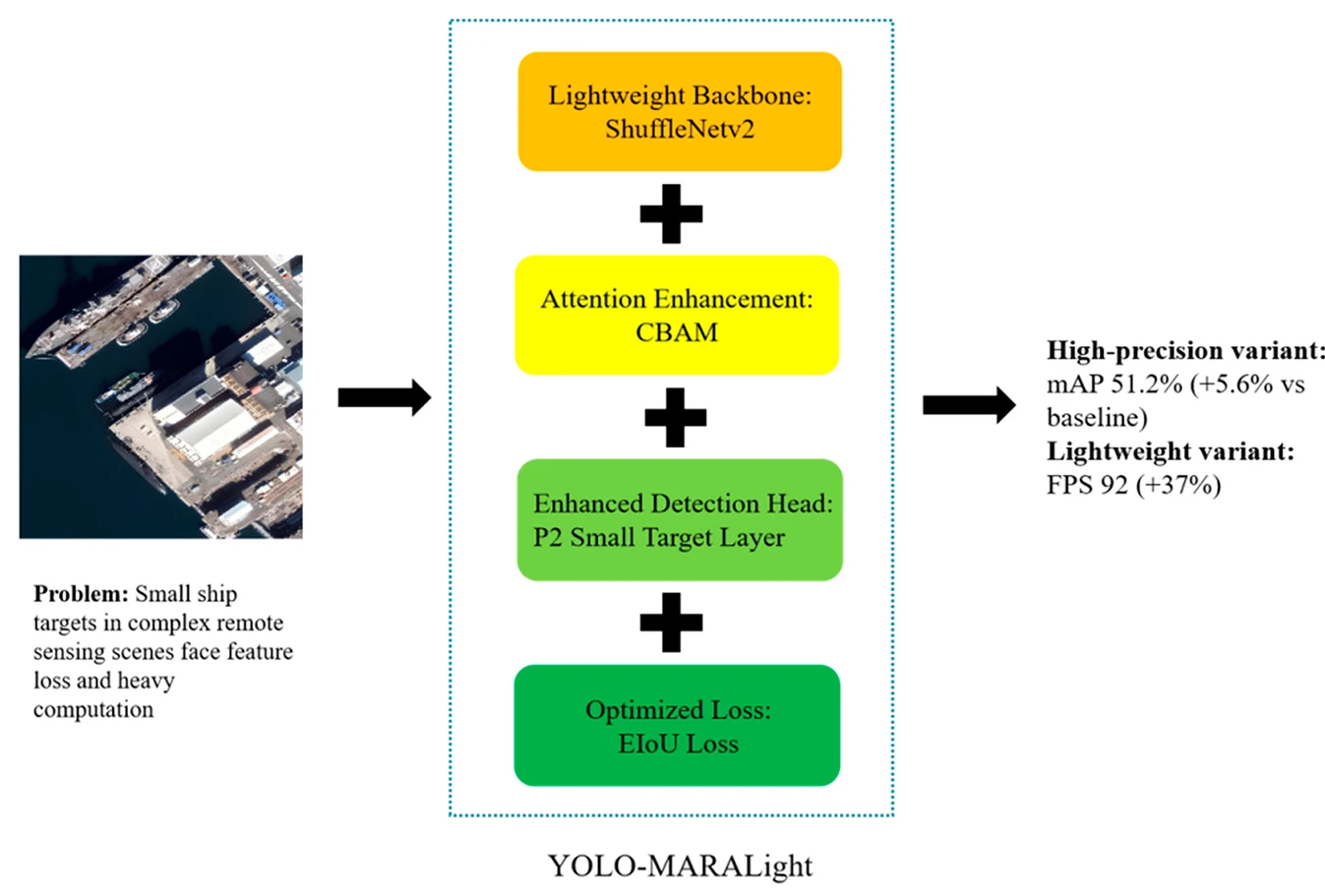
Abstract Ship detection is an effective way of sea area supervision, which has important research value in both military and civil fields. For small ship targets in the sea scene, the deep feature map is difficult to effectively capture their subtle features, resulting in the decline of small target detection accuracy and the increase of the missing detection rate. To solve this problem, this paper proposes a detection algorithm called YOLO-MARALight, which adds a small target detection layer in the head network, uses a larger scale feature map to retain the details, and improves the discrimination… More >
Graphic Abstract
Open Access
ARTICLE
CMC-Computers, Materials & Continua, Vol.89, No.1, 2026, DOI:10.32604/cmc.2026.078779 - 13 August 2026
Abstract Micro-expression recognition (MER) is a demanding problem in affective computing because micro-expressions are brief, low-amplitude, involuntary facial movements that often reveal concealed affective states. Their recognition is complicated by weak muscle activation, short temporal duration, inter-subject variability, class imbalance, illumination changes, and the limited scale of publicly available MER datasets. To address these constraints, this paper introduces BroadAttNet, an attention-driven convolutional framework that embeds a Broadbent-inspired selective attention layer into a compact CNN backbone. The proposed layer learns to assign higher importance to discriminative facial regions while suppressing spatially redundant or noisy responses, thereby improving… More >
Open Access
ARTICLE
CMC-Computers, Materials & Continua, Vol.89, No.1, 2026, DOI:10.32604/cmc.2026.086222 - 13 August 2026
Abstract Fly ash (FA) blended 3D printed concrete (3DPC) offers improved sustainability but requires strength prediction models validated at the mix-composition level rather than within familiar formulations. This study applies leave-one-mix-out (LOMO) cross-validation to benchmark eight machine learning algorithms on 126 experimental records spanning seven FA-blended 3DPC compositions (FA 0–15 wt.%, W/B 0.30–0.35, age 1–28 days). ExtraTrees and ElasticNet achieve the highest composition-level generalisation for compressive strength (CS,
Open Access
ARTICLE
CMC-Computers, Materials & Continua, Vol.89, No.1, 2026, DOI:10.32604/cmc.2026.077025 - 13 August 2026
(This article belongs to the Special Issue: Advances in Chaos Based Cryptography and Image Encryption)
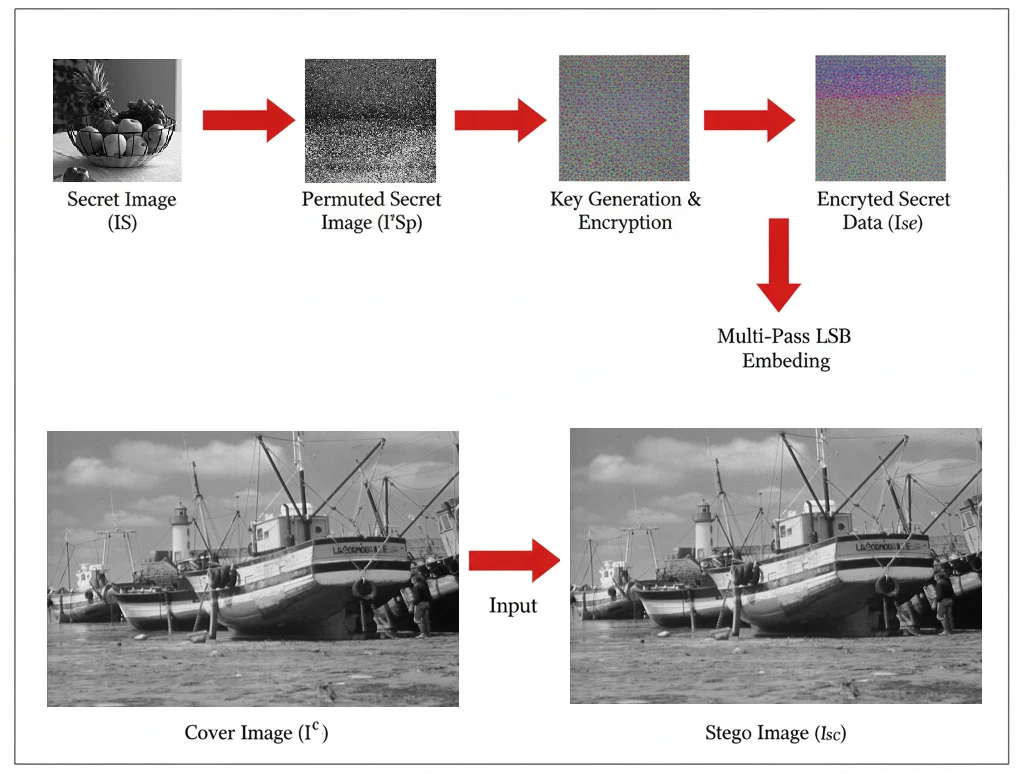
Abstract Current image steganography methods often struggle to balance security, payload capacity, and computational efficiency, with many spatial-domain techniques vulnerable to statistical steganalysis and complex methods incurring high overhead. To address persistent challenges in secure data communication, this paper introduces a novel hybrid chaotic-based multi-layered image security and steganography scheme to enhance resistance against detection while offering adaptable performance. The proposed scheme first integrates Fisher-Yates permutation driven by a Logistic Map PRNG, followed by stream cipher encryption using a Hénon Map-generated keystream to secure the secret image. Embedding is then performed via a unique three-pass chaotic More >
Graphic Abstract
Open Access
ARTICLE
CMC-Computers, Materials & Continua, Vol.89, No.1, 2026, DOI:10.32604/cmc.2026.083418 - 13 August 2026
Abstract Along with the rapid advancement of Artificial Intelligence (AI), humanoid robots are foreseen to have great potential in the service industry, where human interaction is unavoidable. However, current systems face significant hurdles, including Field of View (FoV) problems, markerless real-time mimicry capabilities for humanoid’s fingers and arms. This study addresses these hurdles by developing an integrated hardware and software pipeline for the Unitree G1 Edu humanoid robot. A custom 3D-printed helmet and stabiliser interface were designed using FreeCAD and fabricated to house an external Orbbec Gemini 2 RGB-D sensor, optimising the FoV for frontal human-robot… More >
Open Access
ARTICLE
CMC-Computers, Materials & Continua, Vol.89, No.1, 2026, DOI:10.32604/cmc.2026.083670 - 13 August 2026
Abstract Underwater Wireless Sensor Networks (UWSNs) are exceedingly critical for large-scale underwater applications, such as environmental monitoring, infrastructure inspection, target tracking, and marine surveillance. Nevertheless, network lifetime and communication reliability are severely constrained by harsh underwater acoustic conditions, limited battery power, large propagation delays, node mobility, and uneven energy consumption. In response to these issues, this study proposes a Climate-Aware Hybrid Clustering and Routing (CA-HCR-UWSN) framework to enable sustainable, long-term underwater monitoring. This work proposes a hybrid framework that combines Elephant Herding Optimization (EHO) with the Gravitational Search Algorithm (GSA) to provide an effective solution to… More >
Open Access
ARTICLE
CMC-Computers, Materials & Continua, Vol.89, No.1, 2026, DOI:10.32604/cmc.2026.083120 - 13 August 2026
(This article belongs to the Special Issue: Next-Generation Optimization: Quantum and Hybrid Classical Computing for Real-World Applications)
Abstract Portfolio optimization is inherently a multi-objective problem that aims to maximize expected return while minimizing investment risk, while also facing exponential growth in the search space and increasing market complexity. Existing multi-objective optimization approaches often struggle to balance convergence and diversity, particularly under realistic trading conditions such as short-selling. To address these challenges, this paper proposes a novel Multi-objective Quantum-inspired Tabu Search (MoQTS) framework for portfolio optimization with short-selling strategies. The proposed method incorporates a quantum-inspired superposition mechanism to enhance global exploration and introduces an entanglement-driven neighborhood search strategy that systematically generates structured local perturbations… More >
Open Access
ARTICLE
CMC-Computers, Materials & Continua, Vol.89, No.1, 2026, DOI:10.32604/cmc.2026.085456 - 13 August 2026
(This article belongs to the Special Issue: The Next-generation Deep Learning Approaches to Emerging Real-world Applications, 2nd Edition)
Abstract Multimodal Entity Linking (MEL) aims to map ambiguous mentions in multimodal contexts to their corresponding entities in a multimodal knowledge base. However, existing methods still face limitations in terms of feature extraction granularity, the depth of cross-modal interaction, and architectural coupling. To address these issues, we propose a Two-stage Decoupled Matching Network (TDMN) for multimodal entity linking. The matching process is divided into two stages: intra-modal matching and cross-modal interaction. In the intra-modal stage, textual and visual inputs are processed independently. The framework then proceeds to the cross-modal interaction stage, following the principle of “enhancement… More >
Open Access
ARTICLE
CMC-Computers, Materials & Continua, Vol.89, No.1, 2026, DOI:10.32604/cmc.2026.084488 - 13 August 2026
(This article belongs to the Special Issue: Advanced Networking Technologies for Intelligent Transportation and Connected Vehicles)
Abstract Connected vehicles operating in V2X-enabled intelligent transportation systems often perform repetitive trajectory tracking in repeated tasks. In practical applications, traffic conditions, communication quality, and sensing accuracy may vary from trial to trial. These variations induce time-varying dynamics across repeated runs and reduce the effectiveness of iterative learning control (ILC) schemes when fixed or inaccurately identified models are used. To address this issue, this paper proposes a parameter-estimation-based ILC framework for connected vehicles. Parameter estimation is integrated with a norm-optimal ILC design through an expectation-maximization strategy. The time-varying model parameters and the learning input are updated More >
Open Access
ARTICLE
CMC-Computers, Materials & Continua, Vol.89, No.1, 2026, DOI:10.32604/cmc.2026.083715 - 13 August 2026
Abstract Federated learning (FL) enables collaborative training of deep neural architectures while preserving data privacy, yet its performance often deteriorates in non-IID scenarios, which stems from client-side distribution drift and divergent local updates induced by pervasive data heterogeneity. This challenge is particularly critical for maintaining the structural consistency and generalization of neural models across diverse, distributed sources with significant distribution shifts. In this paper, we investigate how to effectively mitigate label distribution shift and feature distribution skew to enhance the global representation stability of neural architectures. We propose Federated Learning with Consistency Optimization Algorithms (FedCO), a… More >
Open Access
ARTICLE
CMC-Computers, Materials & Continua, Vol.89, No.1, 2026, DOI:10.32604/cmc.2026.084300 - 13 August 2026
Abstract In unmanned aerial vehicle (UAV) flight behaviour understanding, the lack of a unified semantic representation for continuous multi-source temporal data makes it difficult to model flight events, behavioural relationships, and composite behaviours in an interpretable manner. To address this issue, this paper proposes a knowledge graph construction method for UAV flight behaviour understanding. The proposed method integrates atomic event detection, temporal knowledge modelling, and composite behaviour reasoning, thereby enabling the automatic transformation of continuous flight logs into structured behavioural knowledge. First, local statistical features, including smoothed velocity and robust climb rate, are extracted from multi-source… More >
Open Access
ARTICLE
CMC-Computers, Materials & Continua, Vol.89, No.1, 2026, DOI:10.32604/cmc.2026.083167 - 13 August 2026
Abstract Orange is one of the most economically significant citrus crops worldwide, which is essential for the global food distribution network and supports rural livelihoods. However, its high susceptibility to destructive diseases results in substantial yield losses and long-term economic damage. Despite recent advances in smart agriculture, early and precise disease diagnosis remains challenging due to visual resemblance among disease symptoms, high computational cost, and limited model interpretability. To overcome these difficulties, we introduce a novel lightweight and Region of Interest (ROI)-guided explainable machine learning framework to identify orange disease that integrates a strategic feature selection… More >
Open Access
ARTICLE
CMC-Computers, Materials & Continua, Vol.89, No.1, 2026, DOI:10.32604/cmc.2026.085282 - 13 August 2026
Abstract Detecting objects in unmanned aerial vehicle (UAV) imagery is challenging because most targets occupy only a small number of pixels and are often distributed in crowded regions with cluttered backgrounds. For edge-side UAV applications, the detector must also remain compact enough for real-time inference on low-power computing platforms. To meet these requirements, this study develops a YOLOv11n-based small-object detector by redesigning feature extraction, cross-scale fusion, and prediction modules. In the backbone, the proposed Dual-Context Large-Small Convolution (DCLSConv) is embedded into the C3k2 structure to form C3k2-DC, allowing the network to capture broader contextual cues while… More >
Open Access
ARTICLE
CMC-Computers, Materials & Continua, Vol.89, No.1, 2026, DOI:10.32604/cmc.2026.080878 - 13 August 2026
Abstract Hazardous impulsive sound detection plays a critical role in intelligent surveillance, public safety monitoring, and automated emergency response systems. This study proposes a lightweight channel-attention-enhanced deep learning architecture for real-time detection and classification of hazardous acoustic events. The proposed framework utilizes mel-spectrogram representations to capture time-frequency characteristics of audio signals and employs a compact convolutional neural backbone to efficiently extract hierarchical features. To enhance feature discrimination, a squeeze-and-excitation channel-attention mechanism is integrated into the architecture, enabling adaptive recalibration of feature channels and improved robustness under noisy and complex acoustic environments. A custom dataset consisting of More >
Open Access
ARTICLE
CMC-Computers, Materials & Continua, Vol.89, No.1, 2026, DOI:10.32604/cmc.2026.084524 - 13 August 2026
Abstract Higher Education (HE) institutions and Lifelong Learning (LLL) providers increasingly issue digital certificates, yet prevailing solutions often lack interoperable credential schemas, verifiable provenance, and privacy-preserving verification at scale. In parallel, European initiatives promote verifiable credentials and cross-border recognition, but there is limited evidence on how Hyperledger Indy components—Redundant Byzantine Fault Tolerance (RBFT) consensus, Decentralized Identifiers (DIDs), Anonymous Credentials (AnonCreds), and revocation registries—can be integrated into existing learning platforms while satisfying software service-quality and governance requirements. This paper presents a permissioned, privacy-preserving blockchain architecture for secure issuance and verification of educational verifiable credentials (VCs) and evaluates… More >
Open Access
ARTICLE
CMC-Computers, Materials & Continua, Vol.89, No.1, 2026, DOI:10.32604/cmc.2026.086343 - 13 August 2026
Abstract Large language models (LLMs) are increasingly used in retrieval-augmented generation (RAG) systems, where they are expected to answer questions based on retrieved evidence. In many cases, however, the right behavior is not to answer. A model should abstain when the evidence is insufficient, irrelevant, or contradictory. Existing evaluations mainly focus on final-answer accuracy, and they often pay less attention to whether models can recognize evidence quality before responding. To study this problem, we propose the Evidence Sufficiency Benchmark, a five-level benchmark for evaluating answer-abstention calibration. The benchmark covers evidence conditions from L1 Full Support to… More >
Open Access
ARTICLE
CMC-Computers, Materials & Continua, Vol.89, No.1, 2026, DOI:10.32604/cmc.2026.085308 - 13 August 2026
Abstract Anomaly detection is used to identify data points deviating from normal patterns and plays a significant role in fields such as fault diagnosis, biomedicine, and cybersecurity. However, anomaly detection tasks in practical applications often involve high-dimensional data which presents challenges such as severe feature redundancy, hidden anomaly patterns, and difficulty in capturing uncertainty. These issues make it difficult to effectively identify anomalies, thereby limiting the model’s discriminative power and stability. To address these challenges, we propose a high-dimensional anomaly detection model, MSFO-EIF, integrating multi-strategy feature optimization with rough set modeling. First, in the feature space… More >
Open Access
ARTICLE
CMC-Computers, Materials & Continua, Vol.89, No.1, 2026, DOI:10.32604/cmc.2026.085488 - 13 August 2026
Abstract Partial multi-label learning addresses scenarios where each instance is associated with a set of candidate labels that include both relevant and irrelevant ones. In practical scenarios, such label sets are often simultaneously incomplete and noisy, which severely hampers the ability of models to extract compact and discriminative features. To address these issues, we propose an integrated learning paradigm that simultaneously enhances feature compactness and improves robustness against label noise. Our method learns an adaptive fuzzy neighborhood graph to capture the intrinsic relationships among instances. The resulting graph enables reliable label propagation, which effectively rectifies incorrect More >
Open Access
ARTICLE
CMC-Computers, Materials & Continua, Vol.89, No.1, 2026, DOI:10.32604/cmc.2026.084014 - 13 August 2026
Abstract Sudden faults in bearing ring computer numerical control (CNC) grinding machines significantly impact product processing quality and production efficiency, making precise state prediction urgent to avoid downtime risks. However, the numerous operational parameters collected on-site and the focus of existing methods on outputting fault labels without analyzing the evolution trends of the equipment’s operational state lead to unclear fault discrimination criteria and weak traceability, making it difficult to provide effective early-warning support during the incipient stages of a fault. To address these issues, this paper constructs a data-driven integrated algorithm adopting a “predict-then-classify” approach. First,… More >
Open Access
ARTICLE
CMC-Computers, Materials & Continua, Vol.89, No.1, 2026, DOI:10.32604/cmc.2026.083232 - 13 August 2026
Abstract Network science has developed powerful tools for characterizing the topology of emergent networks—systems shaped by evolution, growth, and stochastic attachment—but the topology of constructed networks, graphs generated by the exhaustive application of formal rules, remains theoretically uncharacterized. This paper establishes that the Planning Domain Definition Language (PDDL), the standard formal language for classical planning, is a topological determinist: two binary properties of its operator semantics, reversibility and commutativity, partition the space of generable state-space graphs into exactly three topological archetypes—directed acyclic graph (DAG), Sparse-Cyclic, and Mesh—and this partition is deducible from the language specification without… More >
Open Access
ARTICLE
CMC-Computers, Materials & Continua, Vol.89, No.1, 2026, DOI:10.32604/cmc.2026.084267 - 13 August 2026
Abstract To improve regional traffic signal coordination under uncertain and dynamic traffic conditions, this paper proposes a hybrid Type-2 fuzzy reinforcement learning framework integrated with Beetle Antennae Search (BAS) and Deep Q-Network (DQN), named Type-2 fuzzy Beetle Antennae Search and Deep Q-Network (T2-BAS-DQN). In this framework, DQN remains active during online signal control, while the Type-2 fuzzy module provides uncertainty-aware correction for phase selection and green-time adjustment. BAS is used only in the offline training stage to optimize a low-dimensional parameter vector related to fuzzy correction, reward adjustment, and coordination pressure. A 3
Open Access
ARTICLE
CMC-Computers, Materials & Continua, Vol.89, No.1, 2026, DOI:10.32604/cmc.2026.084123 - 13 August 2026
Abstract With the development of electronic voting schemes, traditional on-site voting is gradually being replaced because of its organizational inconveniences. However, electronic voting takes place in an uncontrollable environment, which opens up the possibility of voter coercion. In this paper, we propose an electronic voting scheme with the property of coercion resistance and privacy preservation. In particular, we introduce the concept of somewhat deniable voting. Somewhat deniable voting gives up verifiability to some extent but not all in exchange for coercion resistance under the condition that the election result remains unchanged. Besides, a somewhat deniable voting More >
Open Access
ARTICLE
CMC-Computers, Materials & Continua, Vol.89, No.1, 2026, DOI:10.32604/cmc.2026.083381 - 13 August 2026
Abstract The rapid expansion of the Internet of Things in critical industrial environments has significantly increased the attack surface, exposing systems to sophisticated cyber threats. Traditional pattern-based intrusion detection systems struggle to detect such advanced attacks, while deep learning approaches, despite achieving high detection accuracy, often suffer from high computational cost and latency, limiting their deployment in resource-constrained edge gateways. Quantum machine learning offers a promising alternative by enabling high-dimensional feature representation; however, current implementations are constrained by hardware noise, limited qubit availability and backend-dependent execution characteristics in the Noisy Intermediate-Scale Quantum era. To address these… More >
Open Access
ARTICLE
CMC-Computers, Materials & Continua, Vol.89, No.1, 2026, DOI:10.32604/cmc.2026.085073 - 13 August 2026
(This article belongs to the Special Issue: Aerial Innovation Spectrum: All-Domain Research in UAV Communication, Navigation, and Autonomy)
Abstract Unmanned Aerial Vehicle (UAV) air-to-ground (A2G) communication is a core enabling technology for emerging low-altitude wireless applications. At the same time, accurate real-time channel emulation remains a key bottleneck restricting its large-scale engineering deployment. Conventional universal channel simulators exhibit limited fidelity when modeling UAV-specific fading characteristics and degrade real-time performance on resource-constrained hardware platforms. In this study, we develop a dedicated UAV A2G channel simulator based on a heterogeneous FPGA platform (Processing System (PS) + Programmable Logic (PL)). To achieve high-precision path-loss prediction, we train a lightweight backpropagation neural network (BPNN) using field-measured data in… More >
Open Access
ARTICLE
CMC-Computers, Materials & Continua, Vol.89, No.1, 2026, DOI:10.32604/cmc.2026.085316 - 13 August 2026
Abstract Weighted fuzzy production rules (WFPRs) provide superior expressiveness and interpretability in knowledge engineering area. However, manual construction of WFPRs is labor-intensive, time-consuming, and inherently subjective, which greatly restricts their practical application. The back propagation neural network (BPNN) has been widely adopted for automatic WFPR extraction. Nevertheless, its high sensitivity to initial weight configurations frequently results in premature convergence to local optima, generating redundant, poorly interpretable rule sets that compromise the inherent interpretability advantage of WFPRs. This paper proposes an elite dynamic scout-guided grey wolf optimizer (EDSG-GWO) and integrates it into a BPNN-based WFPR extraction framework… More >
Open Access
ARTICLE
CMC-Computers, Materials & Continua, Vol.89, No.1, 2026, DOI:10.32604/cmc.2026.082384 - 13 August 2026
Abstract Malicious network attacks pose severe threats to cyberspace, and efficient post-incident traceback and forensics techniques are urgently demanded. Existing payload attribution methods mainly support exact matching, while similar-payload schemes suffer from low efficiency and excessive overhead; most are single-node solutions that fail against IP spoofing and stepping-stone attacks, and the distributed Topology-aware Single Packet IP Traceback System (TOPO) relies on full-node cooperation and flooding forwarding, leading to huge overhead and a nearly 100% false positive rate. To mitigate these issues, we propose Distributed Similar Payload Traceback (DSPT), a distributed system that achieves hop-by-hop traceback via More >
Open Access
ARTICLE
CMC-Computers, Materials & Continua, Vol.89, No.1, 2026, DOI:10.32604/cmc.2026.084319 - 13 August 2026
Abstract Classical digital signature schemes such as RSA and ECDSA are threatened by the development of quantum computers, prompting the need for post-quantum cryptography (PQC). Among the various PQC candidates, multivariate quadratic (MQ) signature schemes have attracted significant attention due to their small signature size and efficient signing and verification. Evaluating these schemes is challenging because compactness, computational efficiency, and effective security are objectives that often conflict with one another and cannot usually be optimized simultaneously. In this work, we adapt a systematic multi-objective evaluation framework to MQ-based signature schemes in the NIST additional digital signature… More >
Open Access
ARTICLE
CMC-Computers, Materials & Continua, Vol.89, No.1, 2026, DOI:10.32604/cmc.2026.083860 - 13 August 2026
(This article belongs to the Special Issue: Intelligent and Privacy-Preserving Malware Detection: Advances in Deep Learning, Memory Forensics, and Federated Security)
Abstract As Distributed Denial-of-Service (DDoS) attacks grow in size and complexity, standard intrusion detection systems are hitting a wall. Most struggle to generalize well, require too much computational power, or lack model diversity. To tackle this, we developed TS-SCHO-TSE, a unified hybrid framework for DDoS detection. Unlike traditional methods that treat feature selection and ensemble building as isolated, step-by-step tasks, our approach combines everything. We map feature masks, classifier states, voting weights, and hyperparameters into a single mixed discrete-continuous search space to optimize them all at once. We tested our system against classical functions (F1–F23), the More >
Open Access
ARTICLE
CMC-Computers, Materials & Continua, Vol.89, No.1, 2026, DOI:10.32604/cmc.2026.085167 - 13 August 2026
Abstract Metaheuristic optimization algorithms have gained wide adoption in engineering and scientific domains. However, many swarm-based methods struggle to balance exploration and exploitation, often converging prematurely on suboptimal solutions. The Sand Cat Swarm Optimization (SCSO) algorithm is one such method, with limited exploration ability constraining its performance on complex problem landscapes. This paper introduced the Enhanced Sand Cat with Selective Opposition (ESCSO) algorithm which combines opposition-based learning with a velocity mechanism to overcome this limitation. In ESCSO, under-performing candidates referred to as Sigma-variant cats are identified using Spearman correlation and replaced with their opposite solutions to More >
Open Access
ARTICLE
CMC-Computers, Materials & Continua, Vol.89, No.1, 2026, DOI:10.32604/cmc.2026.082945 - 13 August 2026
Abstract Large rule-based systems—from automated theorem provers to diagnostic engines and expert systems—face a common bottleneck: when many rules are simultaneously applicable, choosing which rule to fire can dominate search effort. We present
Open Access
ARTICLE
CMC-Computers, Materials & Continua, Vol.89, No.1, 2026, DOI:10.32604/cmc.2026.083954 - 13 August 2026
(This article belongs to the Special Issue: Secure and Scalable Blockchain–IoT Architectures for Next-Generation Distributed Systems)
Abstract The integration of Building Information Modeling (BIM), Internet of Things (IoT), digital twins, and artificial intelligence (AI) has enabled advanced smart building operations with real-time monitoring and data driven decision-making capabilities. However, existing systems still face critical challenges in ensuring trusted data provenance, secure cross-layer data exchange, and robust access control in distributed IoT environments. These limitations significantly affect the reliability and trustworthiness of data driven analytics and system-level decision-making. To address these challenges, this study proposes a blockchain-assisted BIM–IoT digital twin architecture for trusted operational risk prediction in smart buildings. The proposed framework integrates… More >
Open Access
ARTICLE
CMC-Computers, Materials & Continua, Vol.89, No.1, 2026, DOI:10.32604/cmc.2026.084851 - 13 August 2026
(This article belongs to the Special Issue: Secure and Scalable Blockchain–IoT Architectures for Next-Generation Distributed Systems)
Abstract Hop-constrained packet routing is a fundamental problem in wireless sensor networks (WSNs), where latency constraints, energy limitations, and practical feasibility requirements greatly restrict routing choices. Traditional methods based on shortest path and greedy routing have low complexity but cannot adapt to dynamic network changes well, while reinforcement learning for routing has the potential to adapt to network variations but has not been well explored in the hard hop-constrained setting. The current study attempts to fill the gap by modeling hop-constrained routing as the decision-making problem in a finite-horizon setting. An integrated simulation environment is proposed… More >
Open Access
ARTICLE
CMC-Computers, Materials & Continua, Vol.89, No.1, 2026, DOI:10.32604/cmc.2026.086118 - 13 August 2026
Abstract Social network platforms have become primary channels for information dissemination, yet they are increasingly exploited by anomalous users such as bots, fake accounts, and coordinated disinformation spreaders. These malicious actors manipulate public opinion, spread misinformation and undermine platform integrity, posing severe threats to the security of the online ecosystem. Accurate detection of such users is challenging because they often organize into sophisticated high-order connection patterns that extend beyond local neighborhoods. Existing methods address this by either injecting predefined motifs as handcrafted features, which lack flexibility to discover unknown patterns, or employing higher-order Graph neural networks… More >
Open Access
ARTICLE
CMC-Computers, Materials & Continua, Vol.89, No.1, 2026, DOI:10.32604/cmc.2026.085904 - 13 August 2026
Abstract Lattice-based post-quantum cryptographic standards such as Module-Lattice Key Encapsulation Mechanism (ML-KEM) and Module-Lattice-Based Digital Signature Algorithm (ML-DSA) have demonstrated documented susceptibility to power-based side-channel attacks even when protected by higher-order arithmetic masking. Concurrently, hash-based and Verkle-tree digital signature schemes lack a systematic analysis of their physical-layer attack surface. This paper closes both gaps by introducing a Verkle-tree digital signature scheme incorporating multiple complementary countermeasures: (i) arithmetic masking of lattice-based Short Integer Solution (SIS) vector commitments, (ii) a counter-mode deterministic random bit generator (CTR_DRBG) seeded by a hardware quantum random number generator (QRNG), and (iii) an… More >
Open Access
ARTICLE
CMC-Computers, Materials & Continua, Vol.89, No.1, 2026, DOI:10.32604/cmc.2026.086985 - 13 August 2026
(This article belongs to the Special Issue: Multimodal Image Analysis, Data Fusion and Artificial Intelligence for Complex Visual and Material Data)
Abstract Multimodal data fusion and deep learning have opened new frontiers in the analysis of complex visual data acquired from heterogeneous sensing systems. Flood inundation mapping represents one of the most demanding applications in this domain, requiring robust interpretation of complementary but conflicting image modalities under severe real-world constraints. This paper presents CAG-Transformer, a novel multimodal AI architecture for bi-temporal flood change detection through intelligent fusion of Sentinel-1 SAR and Sentinel-2 multispectral imagery. Three tightly integrated contributions address the core challenges of heterogeneous multimodal image analysis. A Change Attention Gate (CAG) performs adaptive channel-wise representation learning,… More >
Open Access
ARTICLE
CMC-Computers, Materials & Continua, Vol.89, No.1, 2026, DOI:10.32604/cmc.2026.085087 - 13 August 2026
Abstract To ensure the reliability of biometric authentication, Face Anti-Spoofing (FAS) models must accurately detect presentation attacks. However, due to the highly complex distribution shifts caused by variations in style, cross-domain generalization remains a significant challenge. Test-Time Domain Generalization (TTDG) has recently surfaced as an innovative framework, facilitating the adaptation of unseen samples to source-domain characteristics through the strategic utilization of learned style bases. Nevertheless, existing TTDG methods optimize randomly initialized style bases solely through statistical objectives, leaving a critical research gap: the lack of explicit semantic constraints inevitably leads to hierarchical semantic inconsistency and weakens… More >
Open Access
ARTICLE
CMC-Computers, Materials & Continua, Vol.89, No.1, 2026, DOI:10.32604/cmc.2026.084436 - 13 August 2026
Abstract Imbalanced data remain a critical challenge in classification, as skewed distributions bias models toward majority classes and diminish sensitivity to minority classes, which are often the most critical. To address this issue, this paper proposes the Information Filtered Hybrid Algorithm (IF-HA), a novel entropy-based sampling method that integrates undersampling and oversampling guided by information theory. IF-HA quantifies instance importance through an instance-wise difference statistic. In the undersampling stage, majority of instances with low difference statistics in the border area are eliminated, while in the oversampling stage, synthetic samples are generated from two minority core points… More >
Open Access
ARTICLE
CMC-Computers, Materials & Continua, Vol.89, No.1, 2026, DOI:10.32604/cmc.2026.082012 - 13 August 2026
Abstract A systematic approach is necessary to address concurrency issues, timing violations, and logical safety breaches in healthcare systems, as traditional empirical testing often fails to uncover non-deterministic flaws that can endanger patient safety. This study proposes a rigorous formal verification methodology based on a triple-constraint framework to prove system reliability prior to the implementation phase. The patient room allocation workflow was modeled as a network of Timed Automata (TA) within the UPPAAL model checker, allowing for the formal evaluation of concurrent processes and shared resources. Our methodology follows three core phases: (1) Formalization, where critical… More >
Open Access
ARTICLE
CMC-Computers, Materials & Continua, Vol.89, No.1, 2026, DOI:10.32604/cmc.2026.085505 - 13 August 2026
Abstract Existing graph-enhanced sequential recommendation methods typically adopt a unidirectional information flow, in which graph embeddings are injected into the sequential encoder only at the input stage, after which the graph signal is progressively diluted through multiple layers of deep processing. In this paper, the graph signal dilution phenomenon is analyzed systematically across three levels—the input, representation, and prediction layers—and the GSPRec model is proposed to address this issue. The core of GSPRec is the Graph-Sequence Collaborative Injection (GSCI) module, comprising three lightweight components: the Graph Confidence Gate (GCG) controls GCN smoothing via dimension-wise bounded interpolation;… More >
Open Access
ARTICLE
CMC-Computers, Materials & Continua, Vol.89, No.1, 2026, DOI:10.32604/cmc.2026.086261 - 13 August 2026
Abstract The design of reward functions is crucial to the success of reinforcement learning, yet the process often relies on expert experience and is difficult to debug. Although large language models (LLMs) offer new opportunities for automated reward design, existing methods still face challenges such as poor interpretability, inability to reuse knowledge, and optimization blindness. To address these issues, this paper proposes a method for structural decoupling and knowledge reuse evolution, referred to as SD-KRE. Its core lies in treating the reward function as a composition of multiple structured units with clear semantics and functionally decoupled… More >
Open Access
ARTICLE
CMC-Computers, Materials & Continua, Vol.89, No.1, 2026, DOI:10.32604/cmc.2026.087214 - 13 August 2026
Abstract Intensive care unit (ICU) time series are irregular, incomplete, and computationally demanding to model at high temporal resolution. Dense Transformer attention captures long-range dependencies but evaluates all pairwise interactions, including many stable or clinically weak measurements. This study presents Sparse Physio-Attention, a physiology-guided Transformer that retains critical-range violations, patient-relative deviations, informative missingness patterns, and task-relevant variables before sparse attention is computed. Dynamic routing subsequently removes weak attention edges, and a late-fusion adapter incorporates static electronic health record context. The analysis included 25,368 eligible MIMIC-IV ICU stays, of which 2740 were sepsis positive. On the held-out… More >
Open Access
ARTICLE
CMC-Computers, Materials & Continua, Vol.89, No.1, 2026, DOI:10.32604/cmc.2026.085946 - 13 August 2026
Abstract Mobile crowdsensing enables large-scale sensing tasks through smart devices carried by users and has been widely applied in intelligent transportation and environmental monitoring. With the increasing complexity of sensing tasks, many tasks require the collaboration of multiple workers with different skills. However, both task-required skills and worker skills are privacy-sensitive, and directly exposing them to the platform may reveal task intentions and workers’ capability profiles. To address this issue, this paper proposes Dual-Fog Privacy-Preserving Multi-skill Task Allocation (DPMTA), a privacy-preserving task allocation scheme for multi-skill collaborative tasks. DPMTA adopts a dual-fog architecture to separately protect… More >
Open Access
ARTICLE
CMC-Computers, Materials & Continua, Vol.89, No.1, 2026, DOI:10.32604/cmc.2026.084877 - 13 August 2026
Abstract Large Language Models (LLMs) have recently advanced in real-world commonsense reasoning, including understanding everyday object behaviors and inferring their attributes from text. However, they remain limited in reasoning about the real-world consequences of events, such as how object failures, obstructions, or structural changes affect the surrounding environment-especially without visual or sensorimotor input. Existing works like PIQA and NEWTON evaluate narrow sub-skills, such as whether an object action makes sense and whether object properties can be inferred, providing valuable benchmarks for commonsense and physical reasoning but offering limited evaluation of how events alter environmental functionality and downstream… More >
Open Access
ARTICLE
CMC-Computers, Materials & Continua, Vol.89, No.1, 2026, DOI:10.32604/cmc.2026.085761 - 13 August 2026
(This article belongs to the Special Issue: Advanced Object Detection and Visual Understanding in Intelligent Systems)
Abstract Accurate waterline detection is critical for automated ship draft monitoring but remains challenging due to weak textures, low contrast, and dynamic maritime interferences. This paper presents TGNet, a task-guided framework that jointly optimizes character recognition and waterline keypoint localization. TGNet introduces a triple attention network (TAnet) with channel, spatial, and texture attention modules to enhance discriminative feature extraction. Crucially, a task-to-task guidance mechanism leverages detected draft characters to spatially constrain and crop feature maps, focusing the keypoint detection head on the most relevant waterline region. Extensive experiments on three large-scale aerial datasets show that TAnet More >
Open Access
ARTICLE
CMC-Computers, Materials & Continua, Vol.89, No.1, 2026, DOI:10.32604/cmc.2026.083877 - 13 August 2026
Abstract Lightweight semantic segmentation remains challenging because compact backbones often weaken feature discriminability and lose fine-grained boundary details. In DeepLabV3+-style encoder-decoder architectures, the direct fusion of high-level semantic features and low-level spatial features may introduce semantic-spatial misalignment, resulting in blurred object contours and fragmented predictions. To address these issues, this paper proposes BFANet, a boundary-aware lightweight semantic segmentation framework based on DeepLabV3+ with a MobileNetV2 backbone. BFANet integrates parameter-free SimAM feature refinement, low-level-guided Dynamic Feature Alignment, and progressive decoder fusion to enhance discriminative feature responses, reduce cross-level feature inconsistency, and recover fine boundary structures. Experiments on… More >
Open Access
ARTICLE
CMC-Computers, Materials & Continua, Vol.89, No.1, 2026, DOI:10.32604/cmc.2026.083615 - 13 August 2026
Abstract Android ransomware has emerged as a major threat to mobile ecosystems. Modern Android ransomware has evolved beyond the reach of traditional signature-based detection, often lying dormant until specific strategic triggers activate its malicious payload. These strategic ransomware variants activate payloads only under specific device states, events, and conditions that are absent in a sandbox testing environment. To address these sophisticated evasion tactics, this article introduces a novel framework, McIFAR (Multi-contextual Interaction-based Detection Framework for Android Ransomware), that leverages in-context emulation within malware sandboxing to elicit dormant behaviours that are missed by conventional testing, thereby transcending… More >
Open Access
ARTICLE
CMC-Computers, Materials & Continua, Vol.89, No.1, 2026, DOI:10.32604/cmc.2026.085633 - 13 August 2026
(This article belongs to the Special Issue: Privacy-Enhancing Technologies for Secure Data Cooperation and Circulation)
Abstract AI agents frequently access external files, databases, and application programming interfaces (APIs) through the Model Context Protocol (MCP). However, these external resources typically lie outside the security boundary of the agent. During data circulation, attackers can not only tamper with the external data but also manipulate critical metadata, such as access permissions, validity periods, and authorization scopes. Even when the underlying data remains intact, such attacks can cause proxies to ingest expired or policy-violating resources, leading to severe privacy breaches and risks of unauthorized execution. To address these challenges, we propose SecuAudit, a privacy-enhancing decentralized… More >
Open Access
ARTICLE
CMC-Computers, Materials & Continua, Vol.89, No.1, 2026, DOI:10.32604/cmc.2026.085268 - 13 August 2026
Abstract Biomedical texts present significant challenges for natural language processing (NLP) due to their complex terminology, intricate contextual dependencies, and highly domain-specific semantics. This study investigates the effectiveness of knowledge distillation (KD) for biomedical text classification, aiming to develop lightweight, resource-efficient models that remain competitive with larger architectures. A balanced dataset of 25,000 PubMed records was constructed, equally distributed across five biomedical domains. Two teacher models (BERT and PubMedBERT) and five student models (DistilBERT, BioClinicalBERT, BioBERT, DistilBioBERT, and DistilRoBERTa) were evaluated across ten distinct KD configurations. Each student model was also directly fine-tuned to serve as… More >
Open Access
ARTICLE
CMC-Computers, Materials & Continua, Vol.89, No.1, 2026, DOI:10.32604/cmc.2026.083432 - 13 August 2026
(This article belongs to the Special Issue: Advanced Object Detection and Visual Understanding in Intelligent Systems)
Abstract The inherent challenges of small objects in remote sensing imagery encompass the degradation of fine-grained spatial details throughout the downsampling stages, semantic inconsistency during multi-level feature fusion, along with unreliable localization caused by noisy samples. To address these issues, this paper proposes an efficient small-object detector termed EMW-YOLO. An Efficient Down-sampling (EDS) module is introduced to preserve fine-grained spatial information and enhance feature representation during feature extraction through spatial rearrangement and cross-dimensional attention. A Multi-Scale Fusion and Enhancement (MSFE) architecture is further developed to improve semantic consistency across feature levels by combining local enhancement with More >
Open Access
ARTICLE
CMC-Computers, Materials & Continua, Vol.89, No.1, 2026, DOI:10.32604/cmc.2026.081338 - 13 August 2026
Abstract Memory-unsafe languages such as C and C++ remain widely used because they provide low-level control and high performance, but they remain vulnerable to spatial and temporal memory-safety violations such as out-of-bounds accesses, buffer overflows, and use-after-free errors. Prior hardware-assisted defenses reduce software overhead, yet many still rely on CPU-side metadata checks that add latency to the critical path and often miss DMA-originated accesses. We show that metadata-access cost is not dominated solely by DRAM latency: a substantial portion of the delay comes from on-chip traversal and cache-related processing. Motivated by this result, we propose SerMC,… More >
Open Access
ARTICLE
CMC-Computers, Materials & Continua, Vol.89, No.1, 2026, DOI:10.32604/cmc.2026.083216 - 13 August 2026
Abstract Low-light infrared–visible image fusion remains challenging due to severe modality imbalance caused by visible-image degradation under insufficient illumination. In low-light conditions, visible images often suffer from luminance attenuation, blurred details, and amplified noise, whereas infrared images preserve stable structural information but lack texture representation. Existing fusion frameworks commonly perform feature interaction within a shared representation space, which may cause degraded visible responses to be progressively suppressed by dominant infrared structures during fusion. To address this issue, this paper proposes DSCAttFuseNet for low-light infrared–visible image fusion. The proposed framework adopts a structure–detail–luminance decoupled modeling strategy to… More >
Open Access
ARTICLE
CMC-Computers, Materials & Continua, Vol.89, No.1, 2026, DOI:10.32604/cmc.2026.077447 - 13 August 2026
Abstract This research focuses on multi-object detection for interrelated industrial components, such as substation parts. Traditional vision models like YOLO rely primarily on visual features, which limits their ability to: (1) disambiguate visually similar objects using contextual cues like relative position or size, and (2) reinforce low-confidence detections that are spatially plausible given neighboring elements. For instance, a visually similar but semantically incorrect object may be misclassified, or a valid but partially occluded component may be discarded due to a low appearance-based score. Our approach addresses these issues by integrating formalized rules based on relative positions… More >

 Login
Login Register
 Submit a Paper
 Propose a Special lssue